
Homepage RESEARCH TEAM PUBLICATIONS NEWS & EVENTS CONTACT US

Chinese Institute for Medical Research, Beijing.

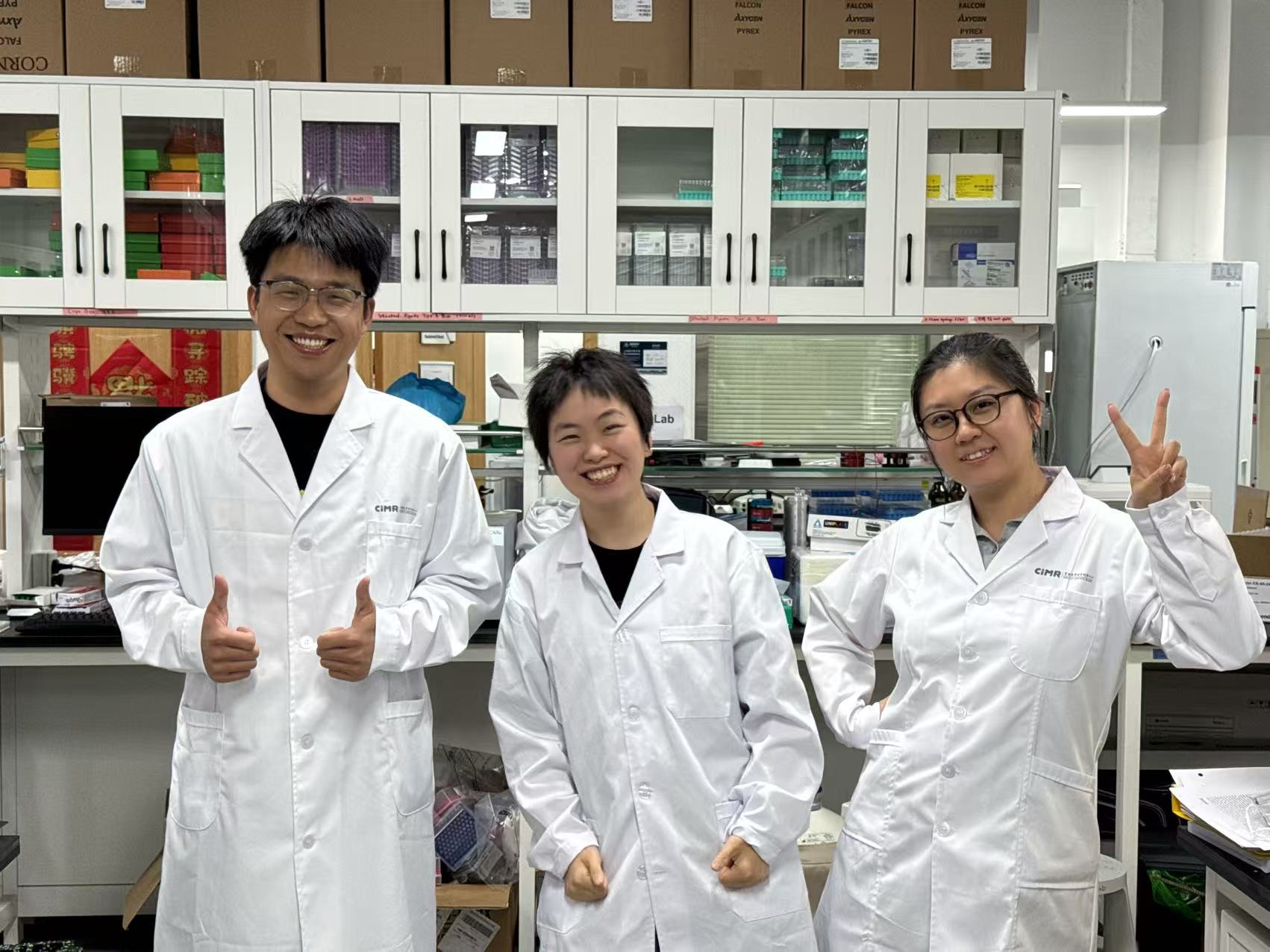
Hansen Lab, Institute for Medical Physiology

Hansen Lab, Institute for Medical Physiology, Chinese Institute for Medical Research (CIMR), Beijing China. (see map)

The Hansen lab studies the molecular basis for cell excitability and its role in pain and Alzheimer's Disease. The Hansen lab has found lipids, in particular saturated fats and cholesterol, set the threshold for excitability. Hyper-excitability (over activation) of cells gives rise to unwanted pain, anxiety, and neurodegeneration.

Treatments for these diseases are shockingly limited, and their limits have been exasperated by a lack of molecular understanding. Solving this problem is a major scientific endeavor.

The Hansen lab has established an important underlying mechanism for excitability based on cholesterol. The cholesterol sets the threshold for spatial distribution of proteins, and the spatial distribution dictates the proteins' function. By studying the function of molecules in their 2D state (spatial biology) the Hansen lab has established a molecular basis for inhaled anesthesia, membrane mediated mechanosensation, and amyloid production in AD. These discoveries are being translated into drug discovery endeavors to treat disease.

Scott B. Hansen
Scott B. Hansen is a principal investigator at the Chinese Institutes for Medical Research (CIMR) in Beijing, with appointments in the Institutes for Medical Physiology and at capital medical university. Scott completed his doctoral training at the University of California, San Diego, and then went on to train with Rod Mackinnon at The Rockefeller University and Loren Walensky at Harvard before starting his own lab at Scripps Research (USA) in 2012. In 2024 Scott moved his lab to CIMR where he continues his studies on membrane mediated anesthesia, neurodegeneration, and the excitability of cells. Outside of lab, Scott likes piano and sports, in particular surfing, running, and skiing.
Chinese Institute for Medical Research, Beijing.

RESEARCH
Role of Cholesterol in Alzheimer's disease

Alzheimer's disease (AD) is a devastating neurodegenerative disease affecting millions worldwide. Most therapeutic approaches to date have targeted removal of AB plaques, an approach tailored to early onset familial AD. However, late-onset AD (the most common form of AD) is characterized by the presence of apoE4 protein (a native cholesterol transport protein). The Hansen lab discover astrocyte derived cholesterol directly increases amyloid production in neurons. The cholesterol is released from astrocytes shipped in ApoE to the neuron where it acts as a paracrine signal to increase amyloid production. This new molecular mechanism helps distinguish important differences between sporadic AD and familial AD and reveals cholesterol uptake as a therapeutic target for AD.

The lab is currently studying cholesterol's regulation of innate immunity in the brain and the role of cholesterol in neuronal hyper-excitability.

Molecular Mechanism of membrane-mediated general anesthesia

Inhaled anesthetics are the main tools for reversing consciousness and blocking pain during surgery in humans. For centuries their properties suggested an interaction with the lipid membrane, but a mechanism remained elusive. The Hansen lab has discovered inhaled anesthetics compete with lipids for a lipid binding site comprised of ordered lipids. We found this unique lipid-lipid interaction organizes the nano-environment of anesthetic sensitive ion channels. The ordered lipid domains behave like ordered protein domains and when they bind to ion channels they regulate the channel. Anesthetics compete with the binding of ion channels to the ordered lipids, displacing the protein and activating for example anesthetic sensitive potassium channel. The channels then induce anesthesia These finding established the first molecular basis for membrane mediated anesthesia. Future studies are investigating membrane-mediated mechanisms of chloride, sodium, and calcium channels.

The role of cholesterol in cardiac disease

To sustain life, the heart constantly beats with a dynamically controlled threshold. Bad diets have produced an epidemic of heart disease. Potassium channels, including inward rectifier 2 (Kir2) are key proteins that set the threshold for the beating of a heart. The Hansen lab has found that cholesterol sequesters Kir2 from its activating lipid phosphatidylinositol 4,5 bis phosphate (PIP2). Low mechanical shear and polyunsaturated fatty acids disrupt the cholesterol allowing the channel to bind to PIP2 and set the threshold of cardiac contractions. These findings help explain why exercise (increased blood shear) and diets high in PUFAS benefit your heart.

Team
Yang Yu 
Position:
Lab Manager
Email:
yuyang@cimrbj.ac.cn
Xizhe Xie 
Position:
Research Assistant
Email:
xiexizhe@cimrbj.ac.cn
Lesley Yajing Ren 
Position:
Administrative Assistant
Email:
renyajing@cimrbj.ac.cn
Ziwen Zhang 
Position:
Research Assistant
Email:
zhangziwen@cimrbj.ac.cn
Chaoguang Yang 
Position:
PhD Student
Email:
yangchaoguang@cimrbj.ac.cn
Abby Qiqing He 
Position:
PhD student
Email:
heqiqing@cimrbj.ac.cn
Linshuai Hao  
Position:
PhD Student
Email:
haolinshuai@cimrbj.ac.cn
PUBLICATIONS
NEWS & EVENTS
Contact Us
No. 10, Xitou Tiao, You'anmenwai Fengtai District, Beijing 100069 China
Lab manager:
yuyang(at)cimrbj.ac.cn
Administrative assistant:
renyajing(at)cimrbj.ac.cn (For administrative information)
Please replace "(at)" with "(@)" when using